
in : News and Events
When you're replacing a large liquid nitrogen tank with an even larger one, simply pouring a bigger piece of concrete isn't quite enough. The foundation has to be designed, excavated, reinforced and inspected to handle the job.
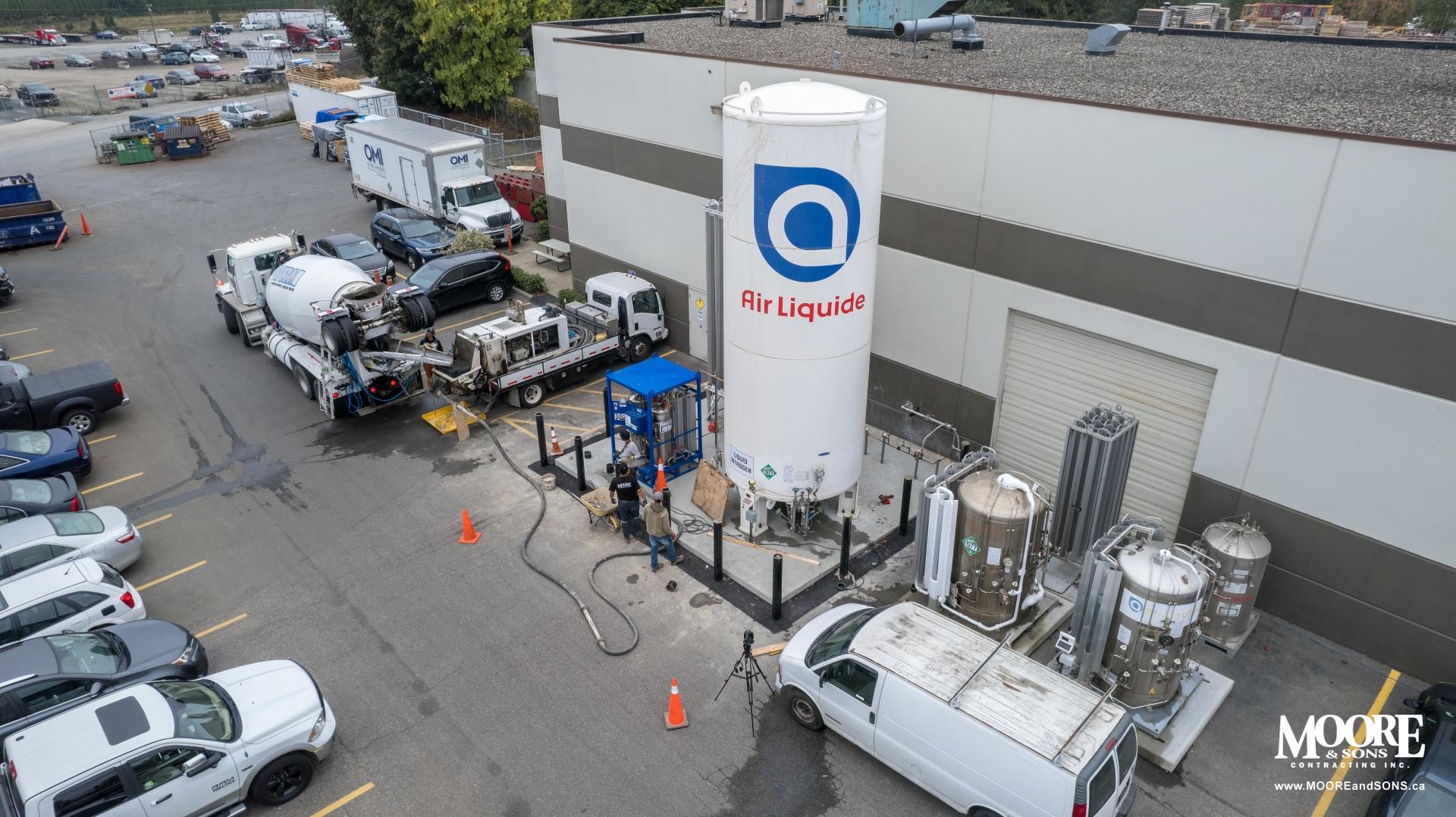
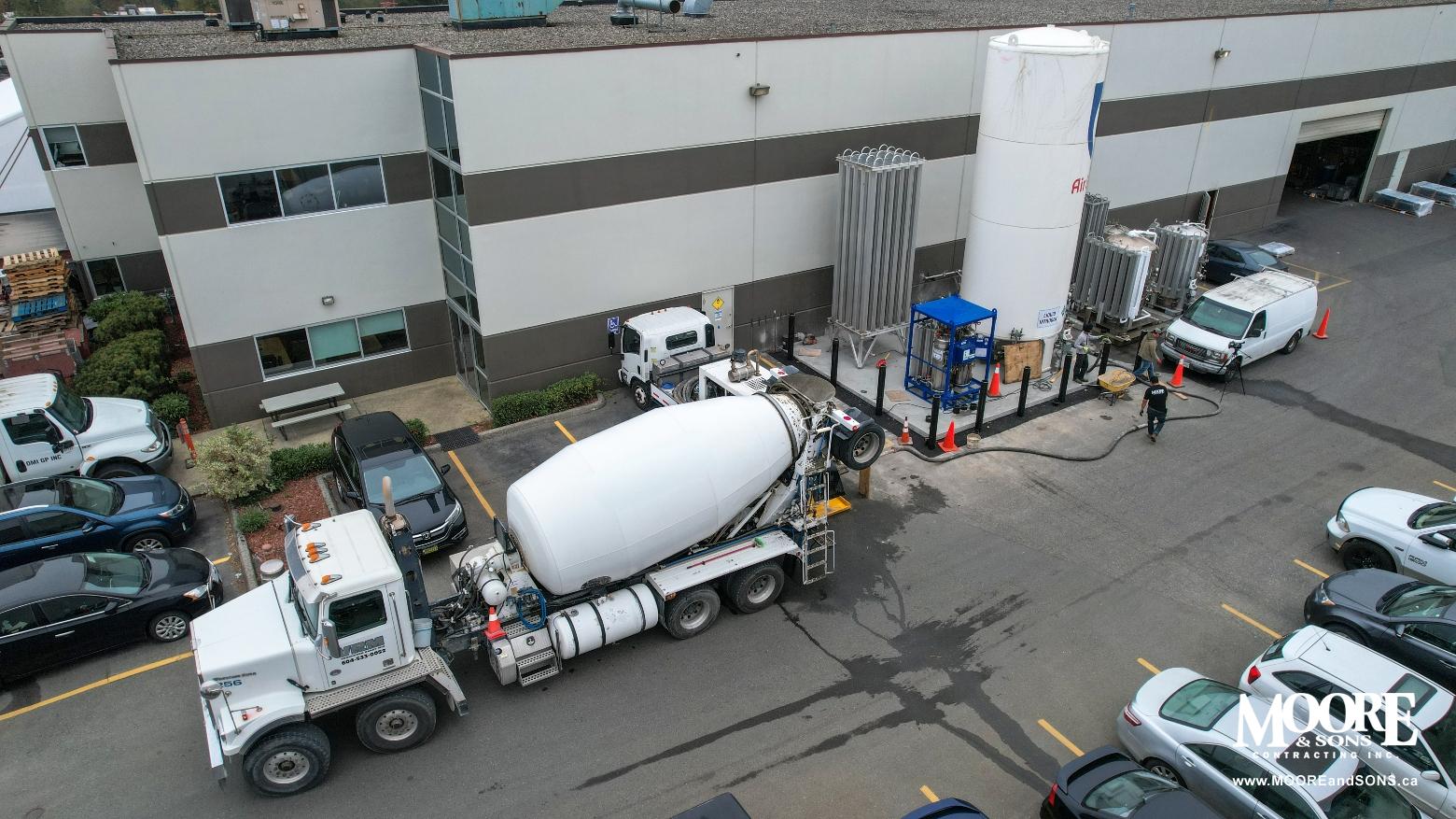
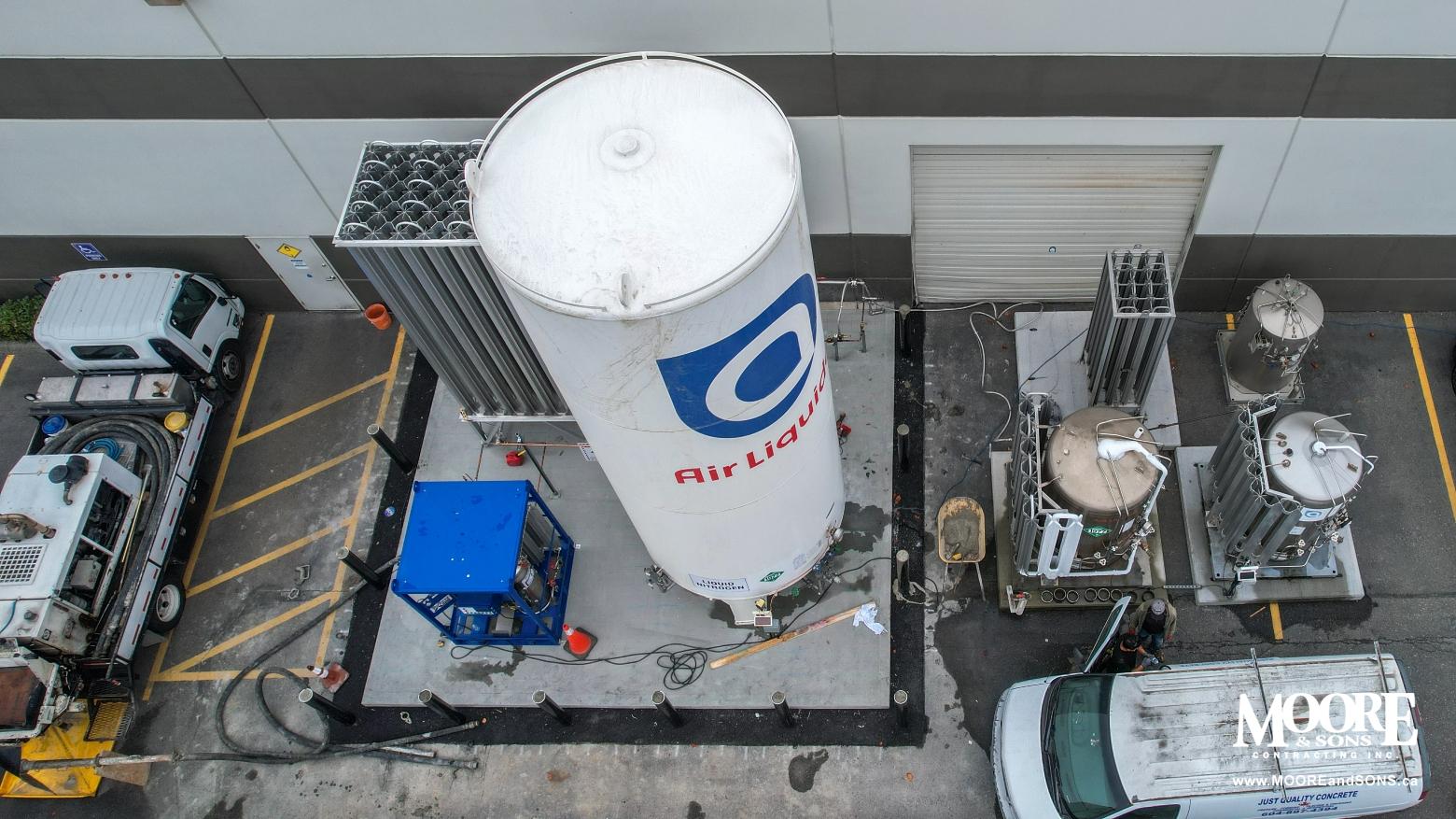
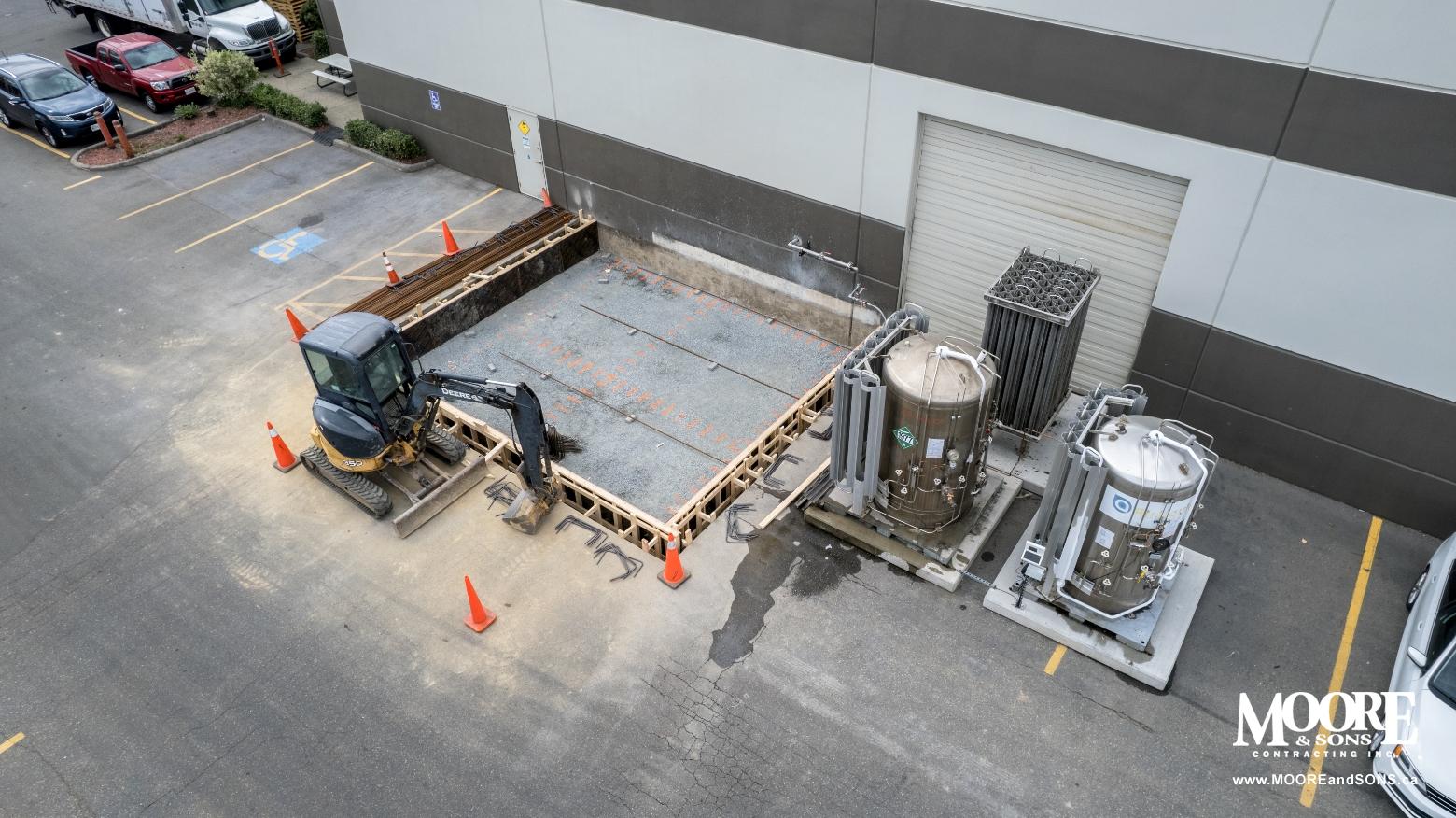
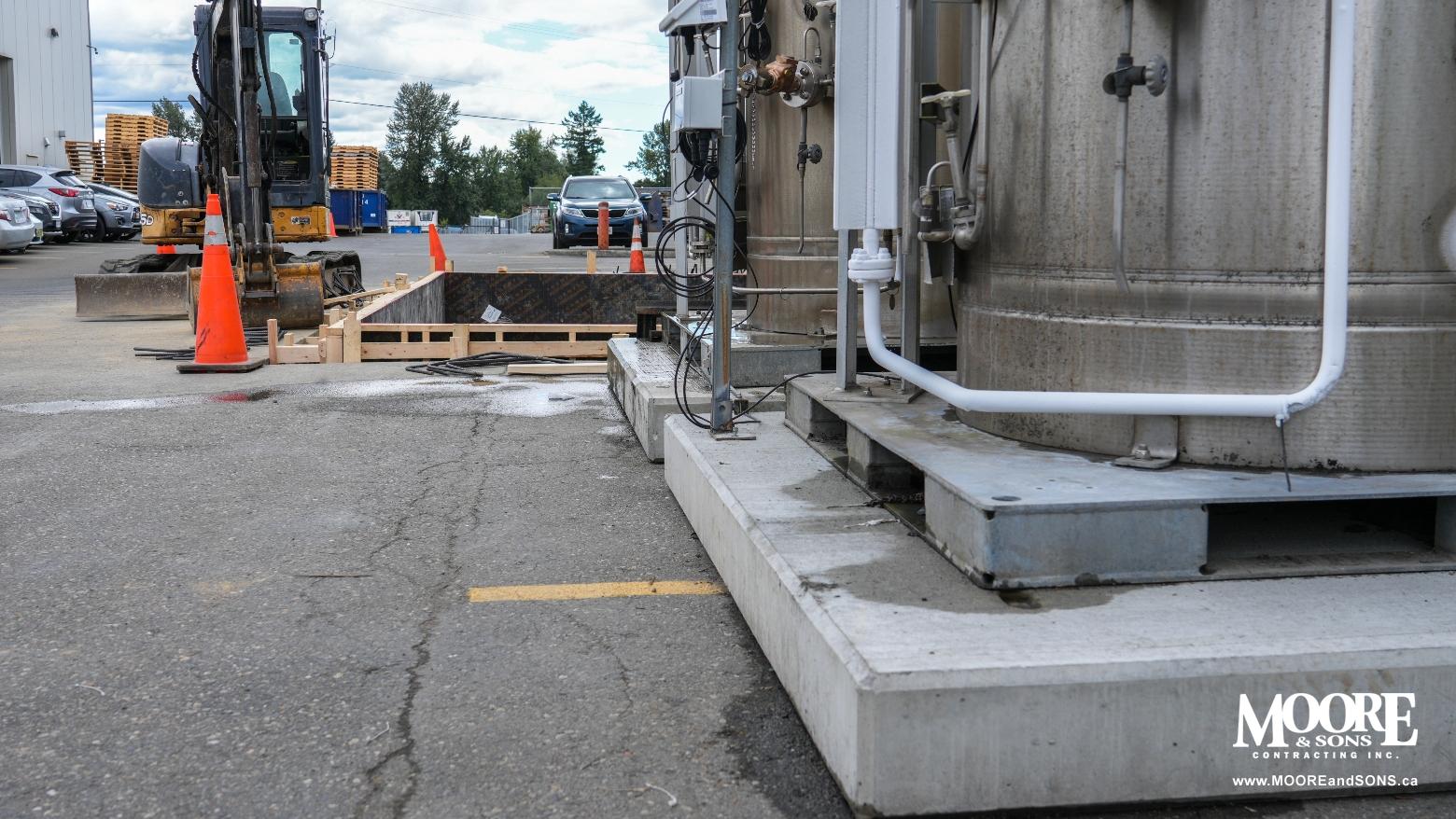
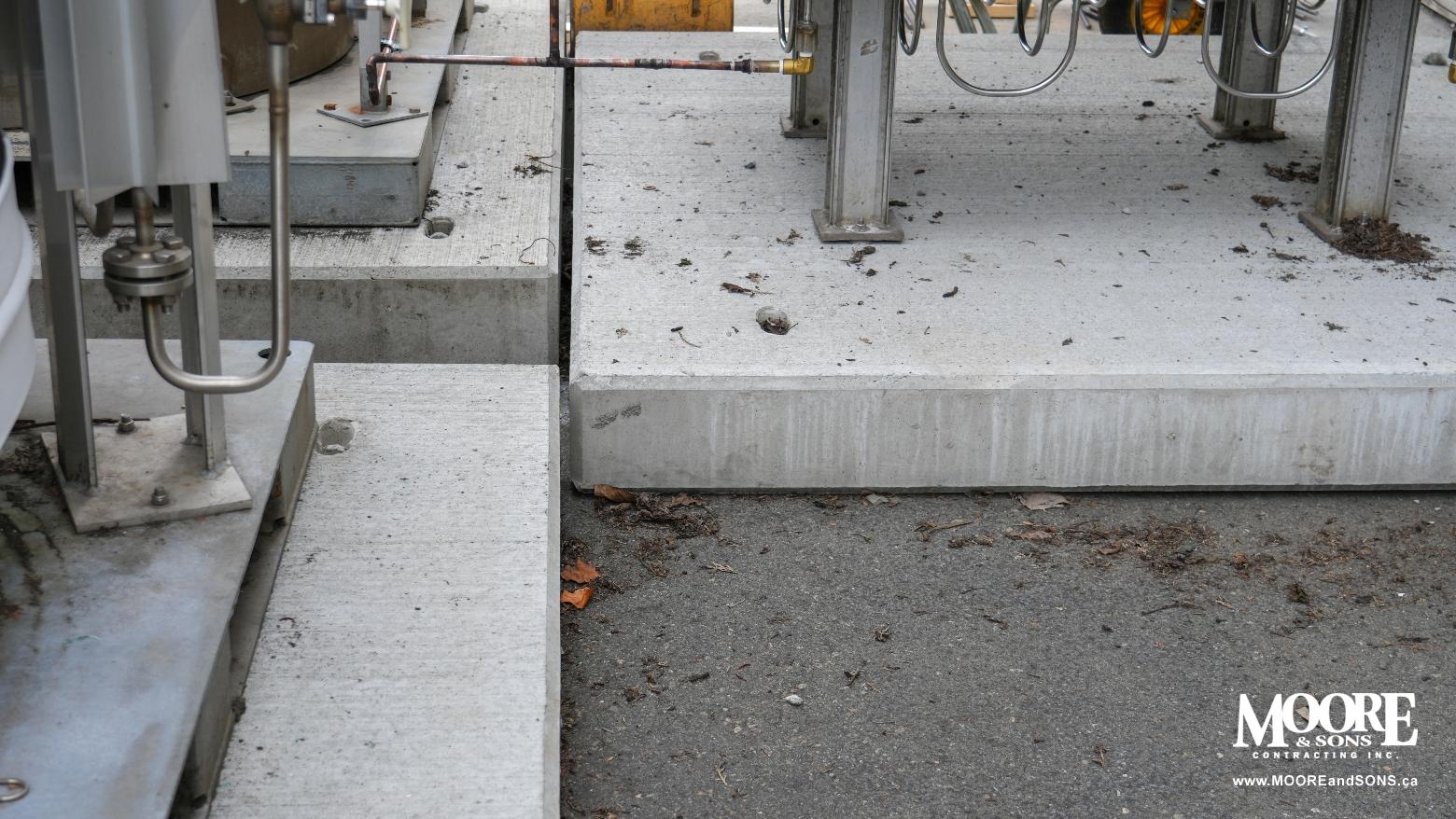
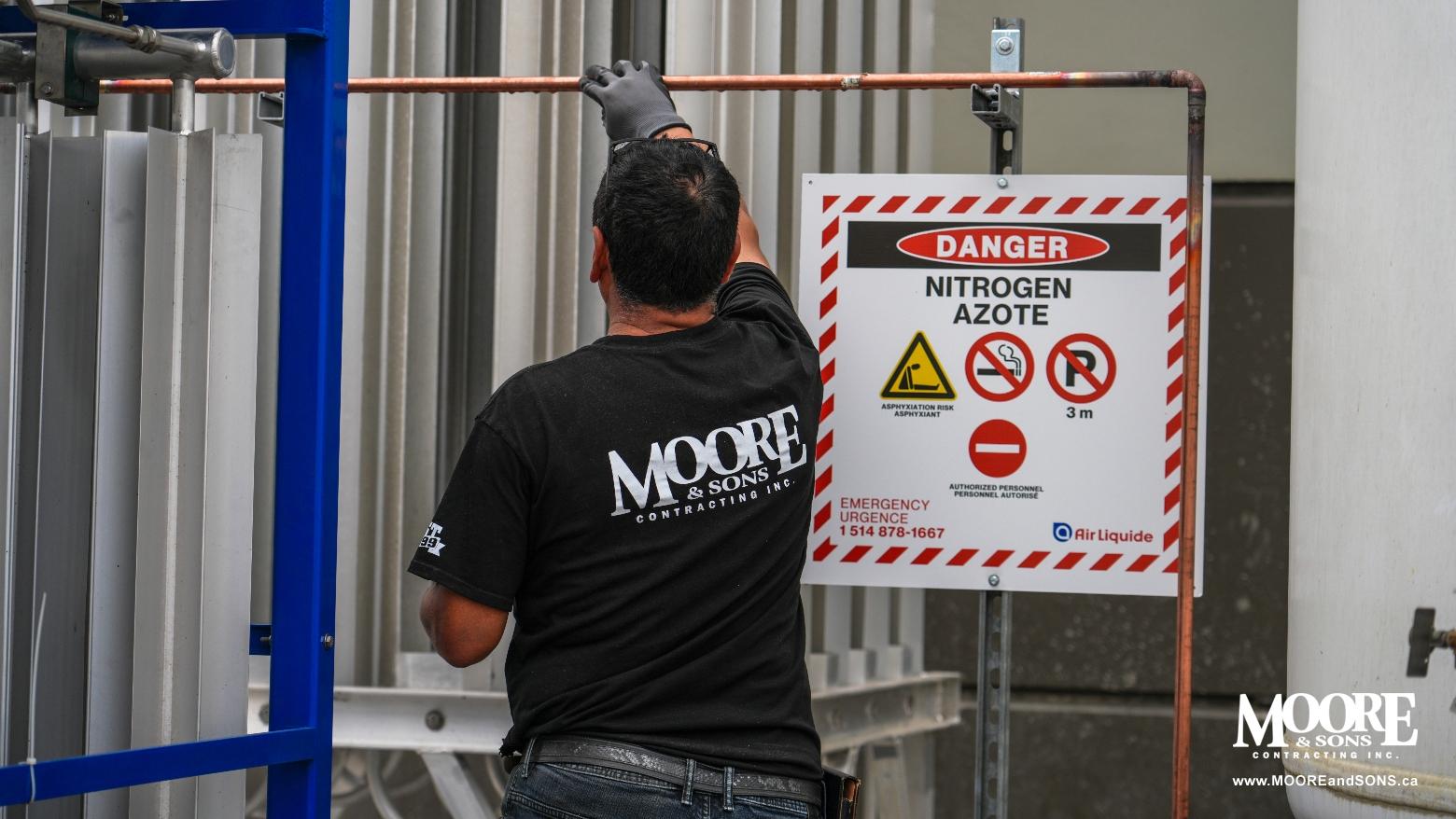
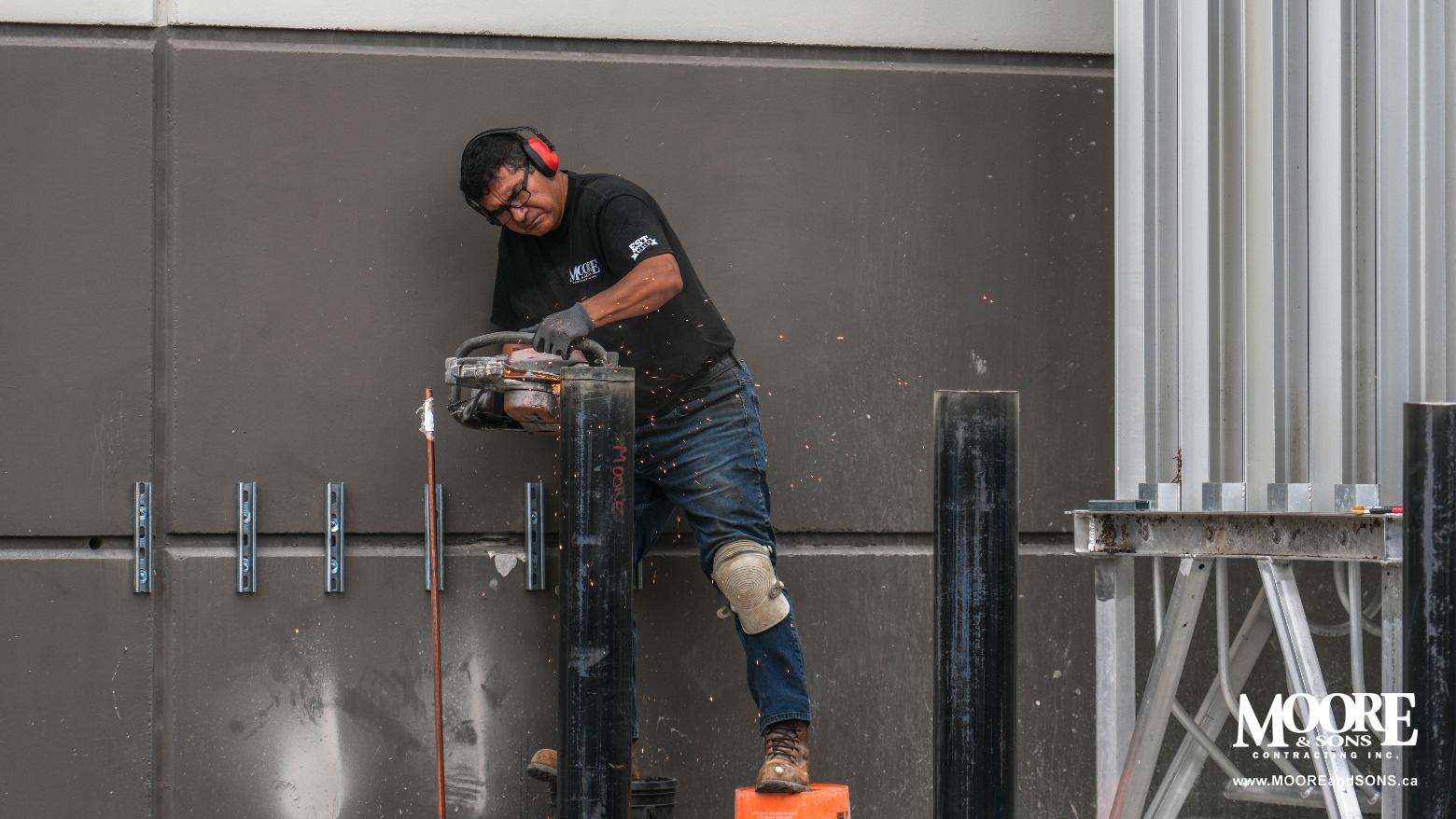
That's exactly what Moore & Sons recently completed for Overlanders Manufacturing in Abbotsford.
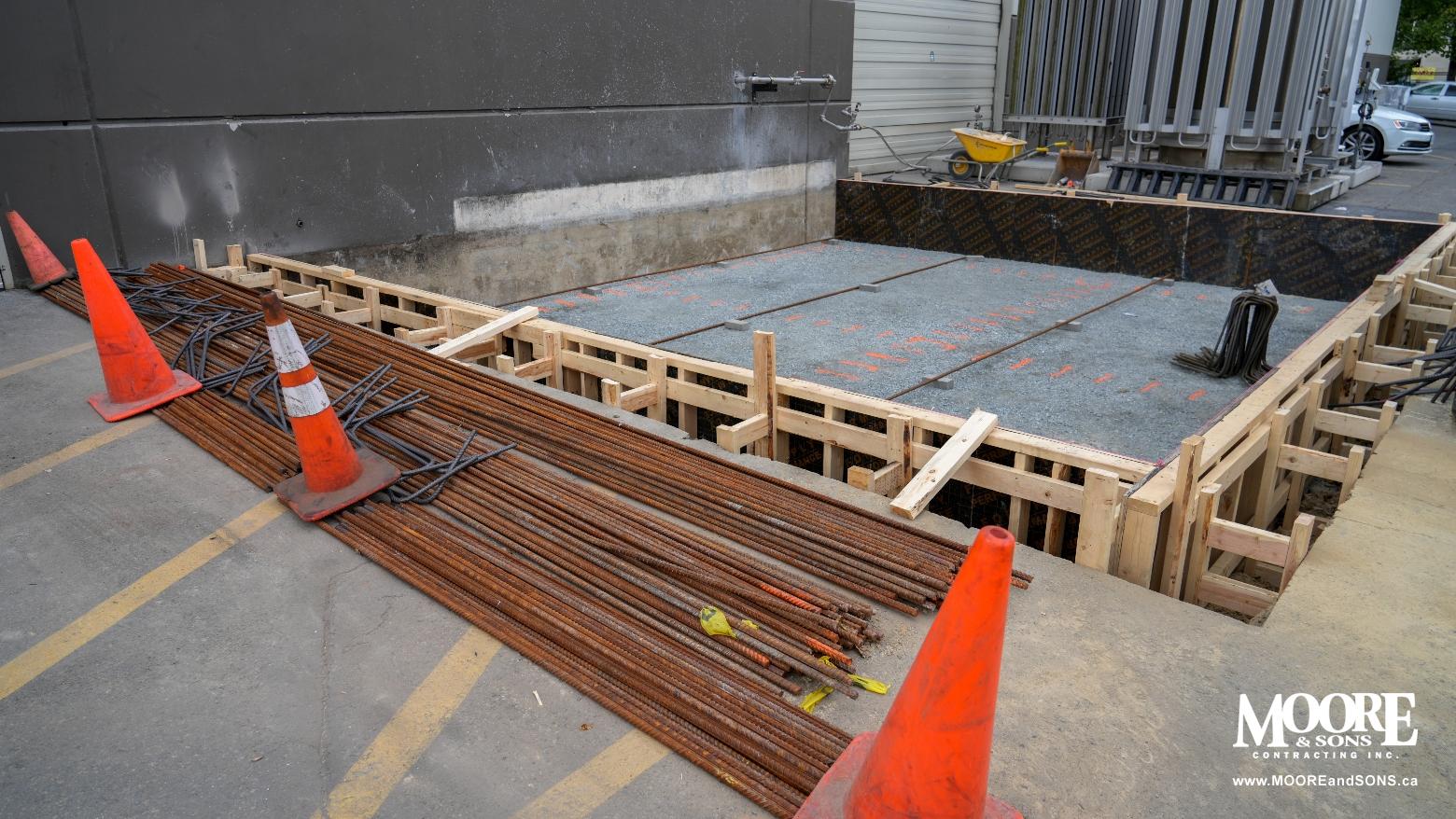
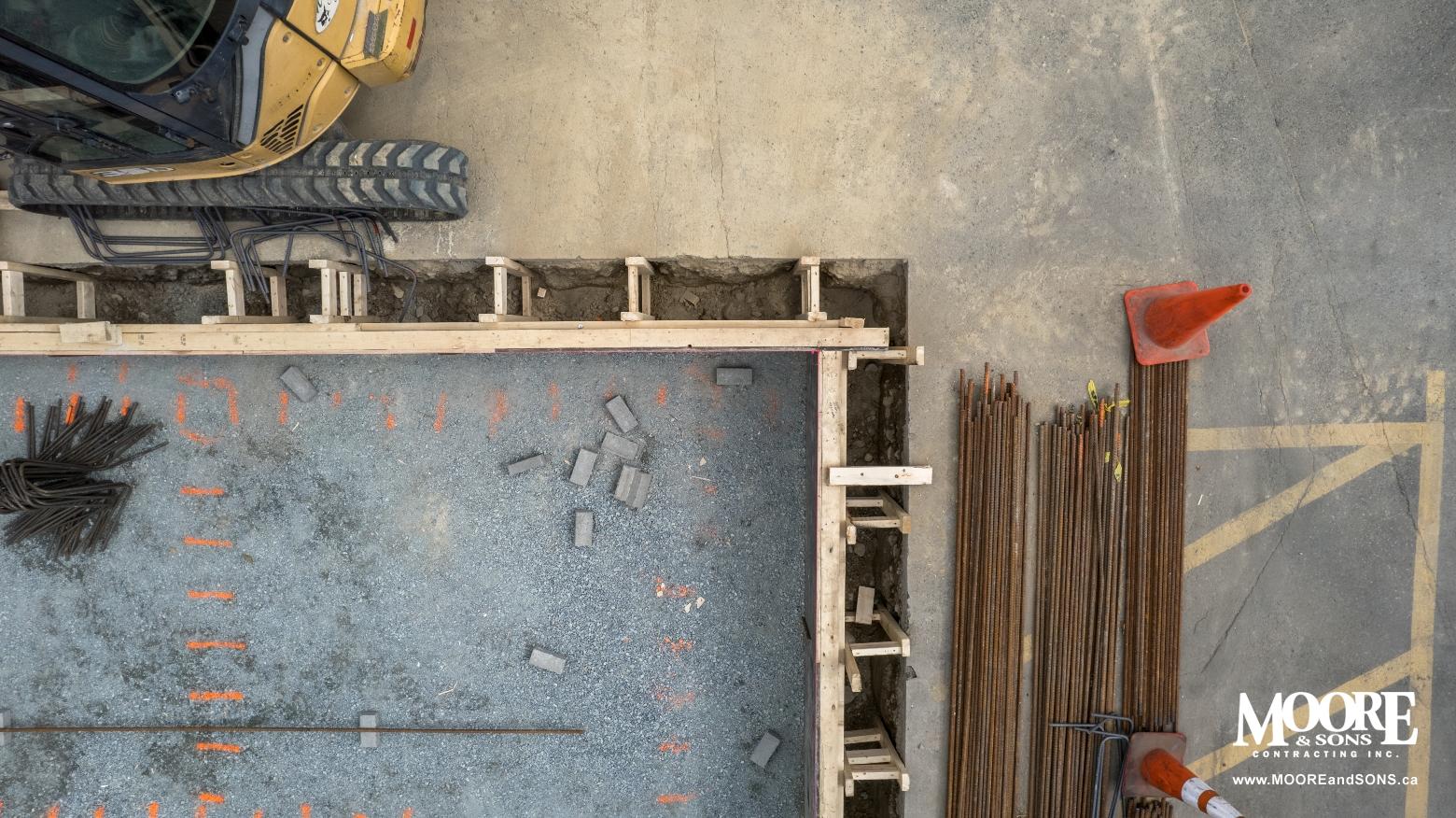
The project started with removing the existing liquid nitrogen tank from its original concrete pad, followed by the less glamorous but necessary part—jackhammering out the old concrete. We then cut and removed the surrounding asphalt before digging down 28 inches across a 25' × 28' area to make room for the new 21' × 24' × 2'-deep concrete slab.
Once the excavation was complete, we placed and compacted 2 inches of road base at the bottom. Before moving any further, we brought in the geotechnical engineer to inspect and approve the base.
Then came the steel.
The new foundation was reinforced with a double rebar grid, using 25 mm rebar on the bottom and 20 mm rebar on the top. With a much larger liquid nitrogen tank going on top, this was no place to cut corners.
And before a single cubic metre of concrete could be poured, we had two more boxes to check.
First, the structural engineer inspected and approved our rebar installation. Then came the final approval from the City of Abbotsford to proceed with the concrete pour.
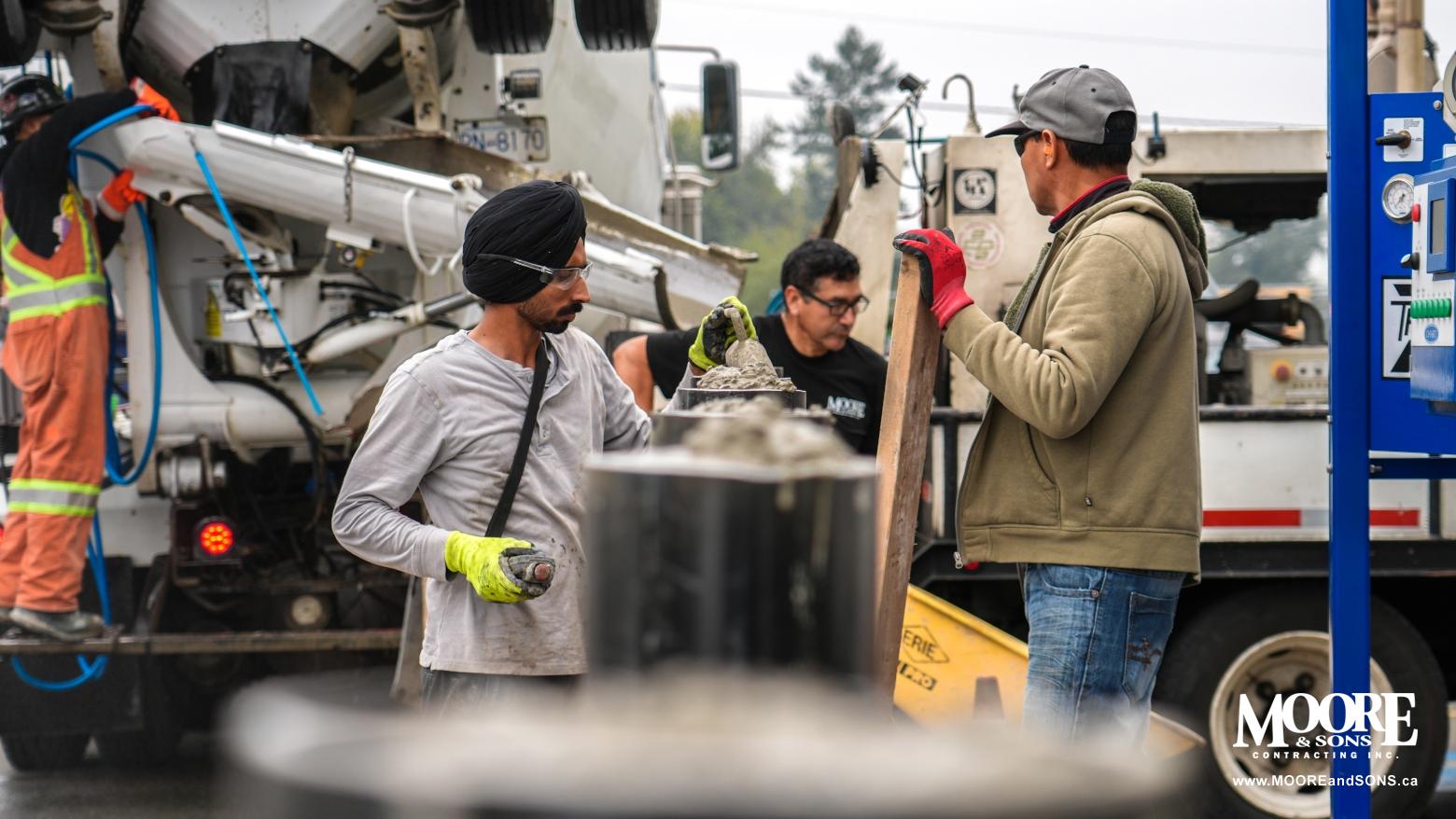
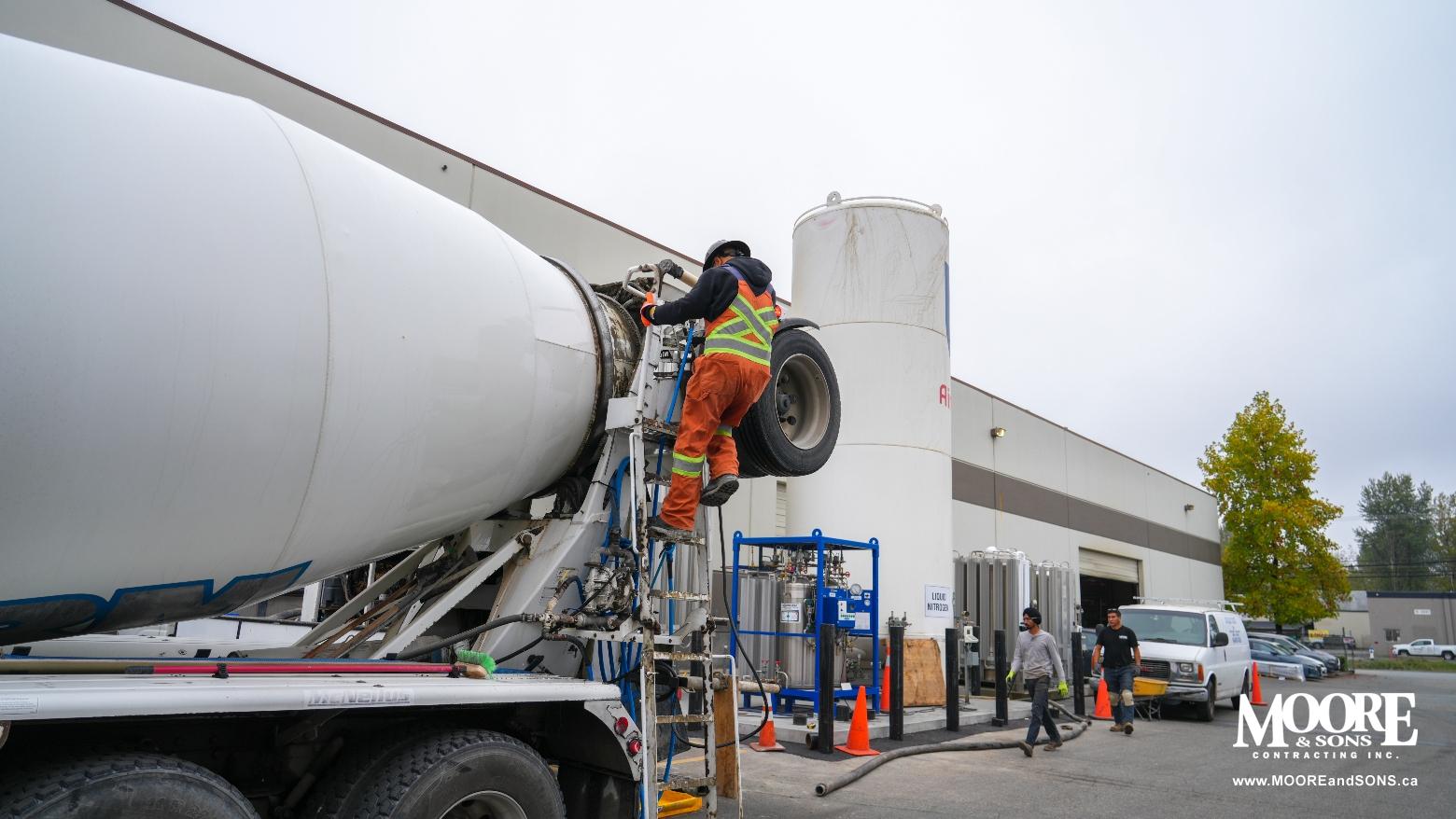
Finally, it was time to bring in the concrete.
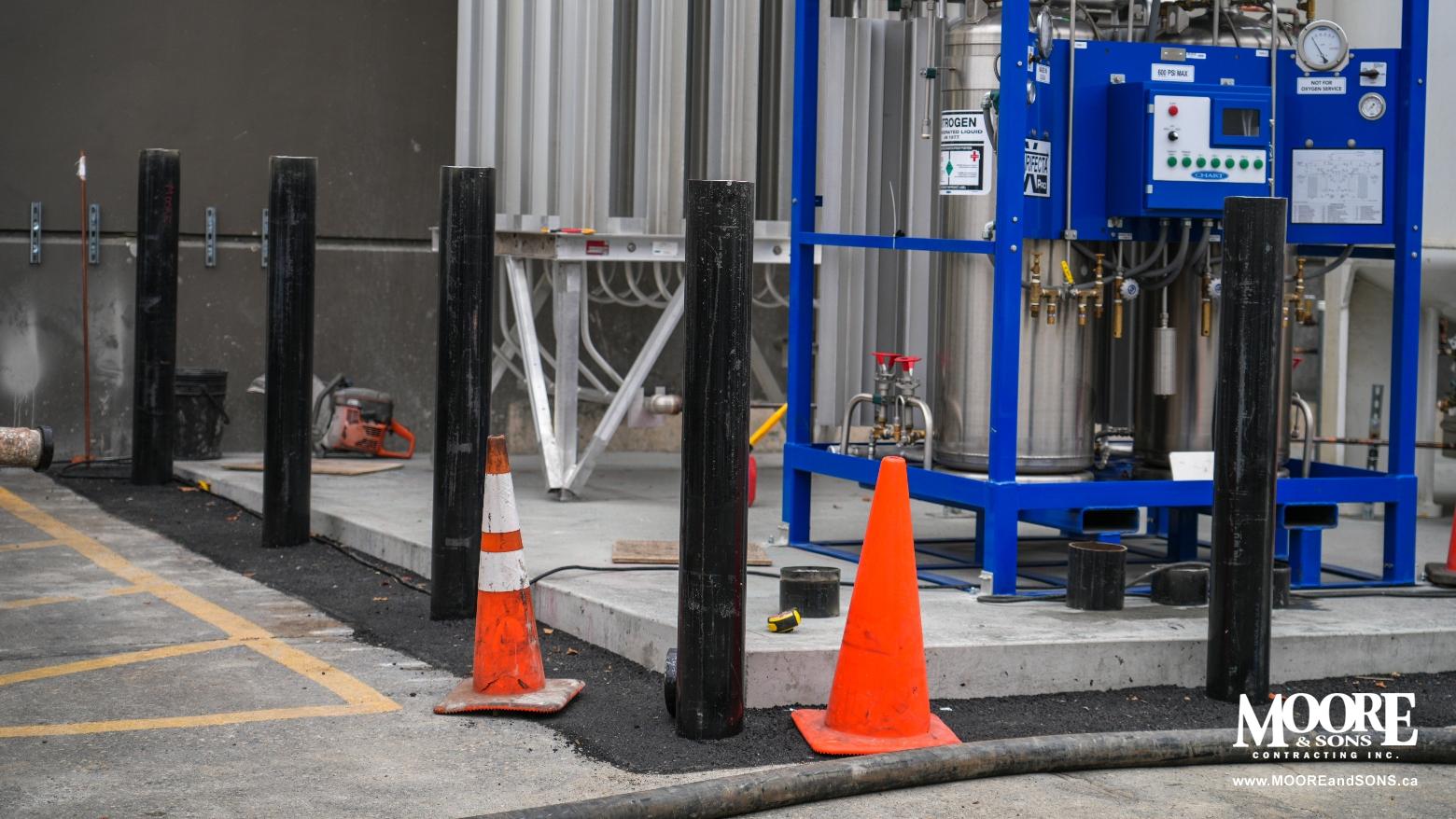
The new slab required 40 cubic metres of 32 MPa concrete, creating a substantial new foundation for the larger tank. Once the concrete had set and the forms were stripped, we finished the job by installing 12 six-inch steel bollards around the pad to help protect the new liquid nitrogen tank.
From removing the old foundation to building a substantially stronger one, this project was a good reminder that some of the most important work happens long before the concrete truck arrives—and sometimes, making room for something bigger takes a lot more than simply making the pad bigger.