
in : News and Events
Ever wondered how insulated cladding is installed on enormous water reservoir tanks—and why it is so important in a place like Cranbrook, BC?
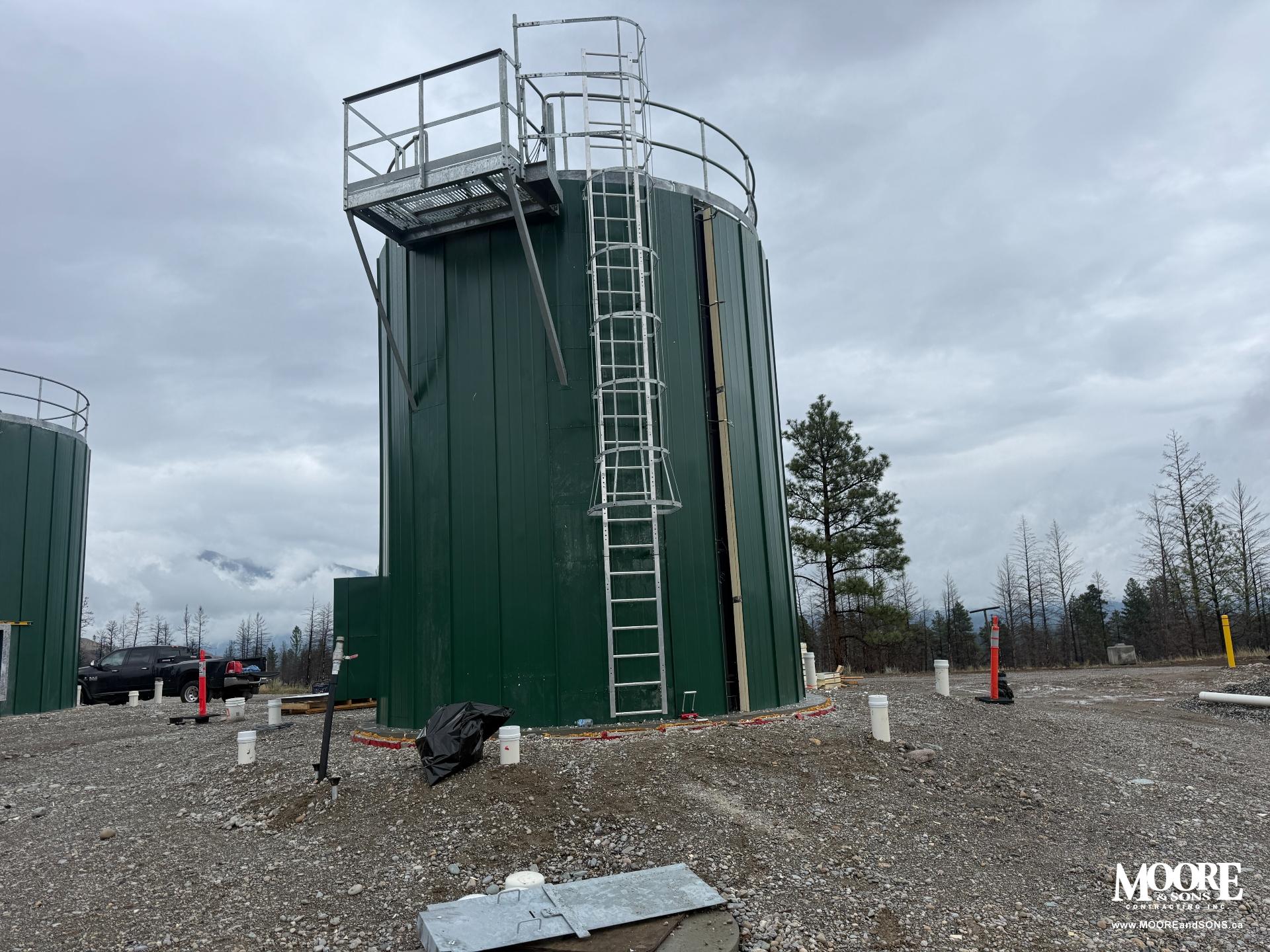

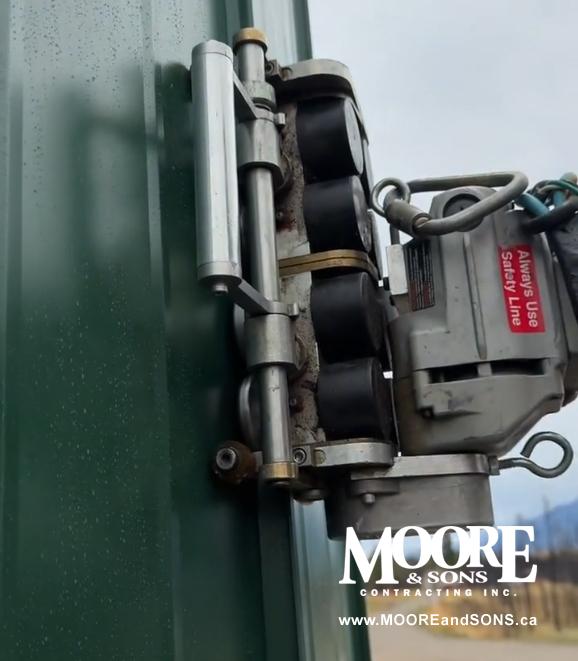
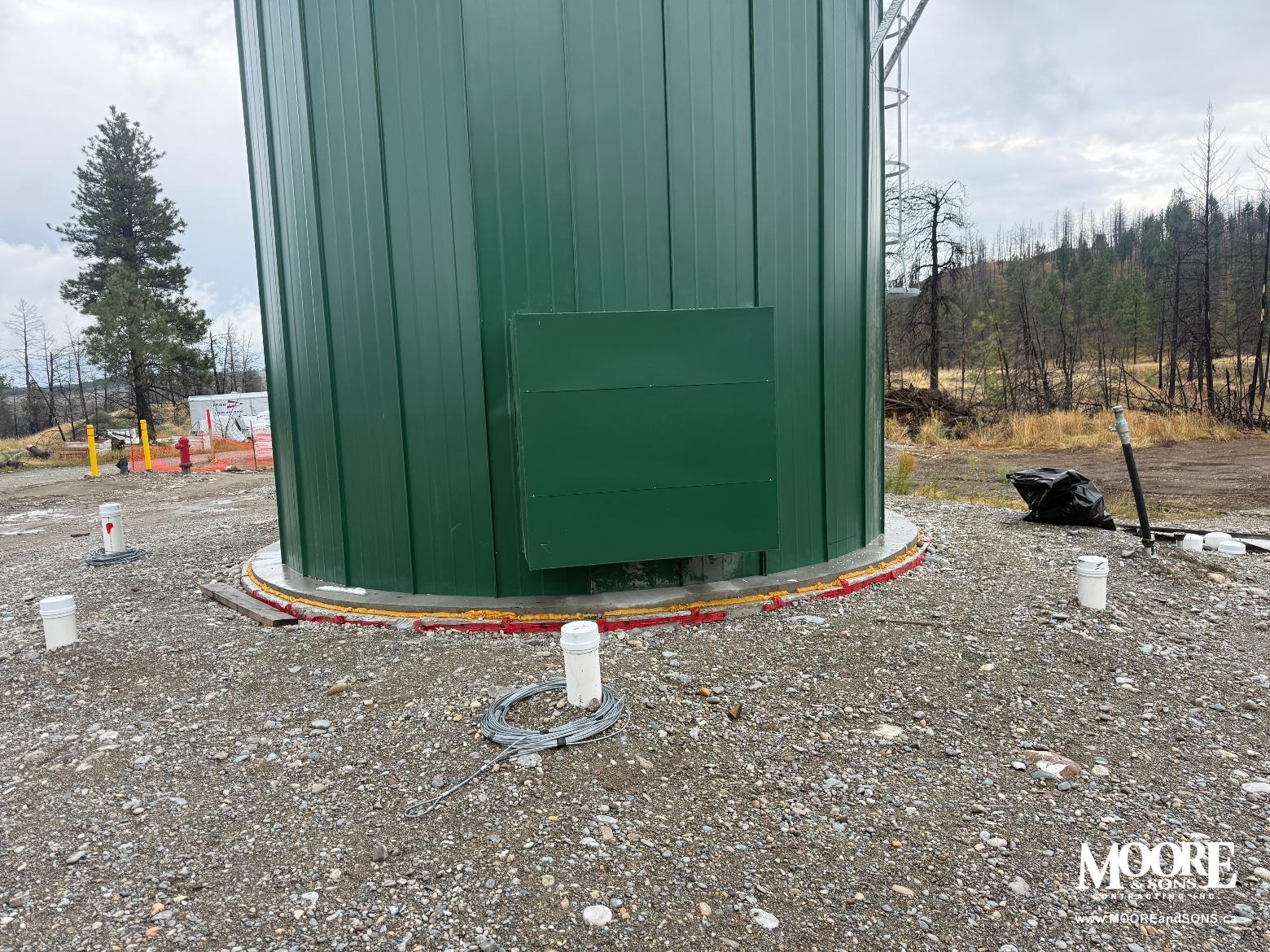
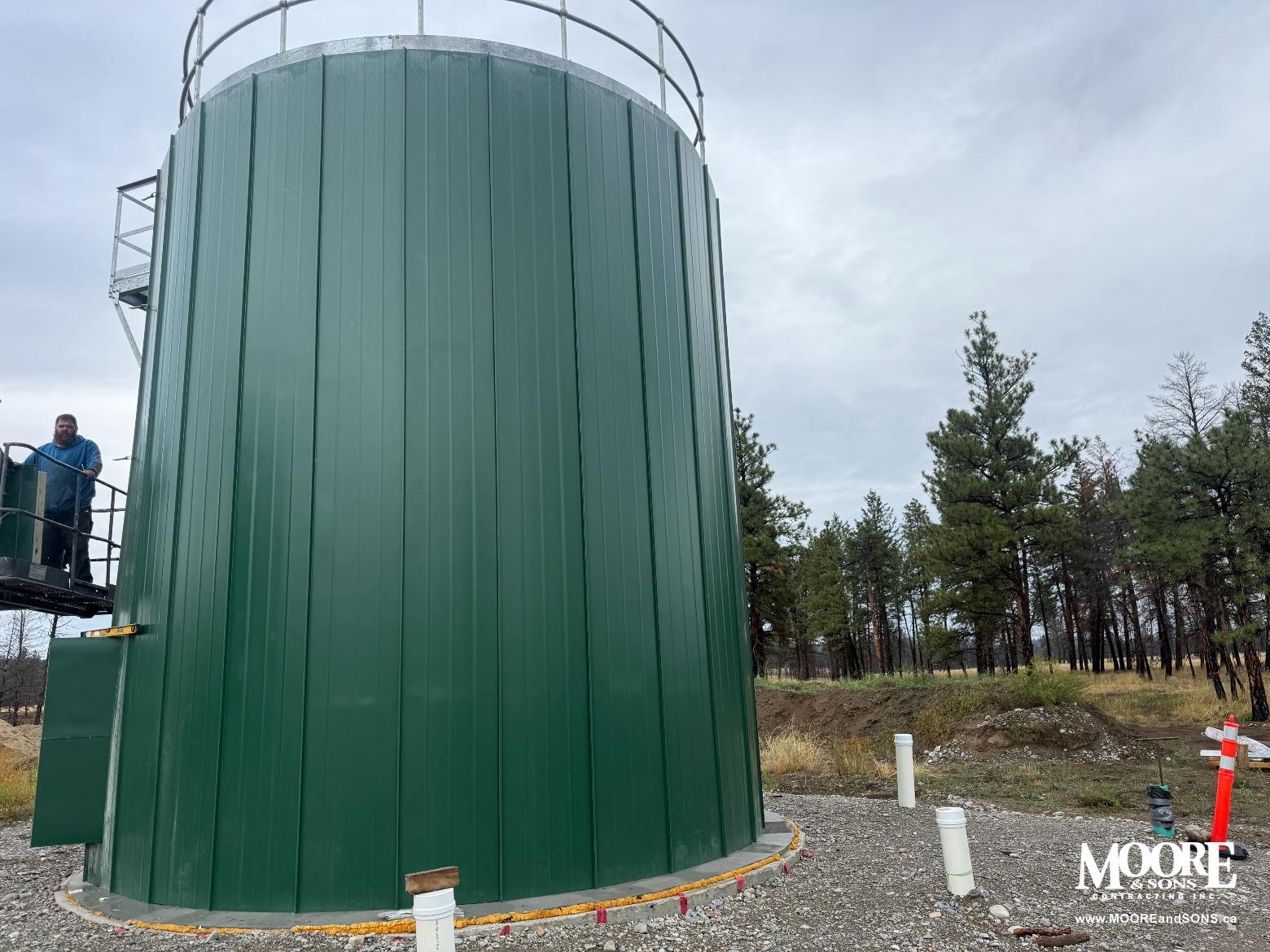
This video gives you a behind-the-scenes look at how we install insulated cladding on large water reservoir tanks to help protect them from the elements and keep the water inside protected through some of BC's most challenging weather conditions.
Moore & Sons recently completed the installation of 6-inch-thick insulated cladding on two large water reservoirs in Cranbrook. And in Cranbrook, insulation isn't just a nice-to-have. The area can experience very cold winter temperatures, with prolonged periods of freezing weather, while summer can bring surprisingly hot temperatures. These dramatic seasonal swings make protecting above-ground water storage infrastructure from the elements especially important.
The two reservoirs sit on 25-foot-wide concrete bases that we constructed, and we assembled the reservoir tanks themselves last year. Now, with the insulated cladding in place, the tanks have an added layer of protection designed to help them withstand Cranbrook's demanding climate year-round.
Installing cladding on tanks of this size is certainly not your everyday construction job. The insulation has to be carefully fitted around the enormous cylindrical structures, with the cladding installed to create a durable exterior envelope while also giving the reservoirs a clean, finished appearance.
These two Cranbrook reservoirs are just the latest addition to our growing experience with this type of work. To date, Moore & Sons has completed 63 water reservoir tank bases throughout BC, Alberta and Saskatchewan, along with more than 20 insulated cladding installations in a variety of colours and thicknesses throughout BC.
From building the concrete foundations to assembling the tanks and, finally, wrapping them in their insulated exterior, we've been fortunate to be involved in virtually every stage of these projects.
It may look like we're simply putting insulation around a giant tank—but there is quite a bit more to it than that!